Die and base defined
The die is the upright tablet that carries the inscription; the base is the wider block it sits on. Both are priced by cubic volume, so height, width and thickness each push the total.
I had to put a stone on my father's grave in a hill town cemetery and could not find out what it should cost or who signs off on it
The die is the upright tablet that carries the inscription; the base is the wider block it sits on. Both are priced by cubic volume, so height, width and thickness each push the total.
Barre gray granite is usually the cheapest option from a Vermont shop because freight is short and the material is bought in quantity. Imported blacks, reds and greens carry both a higher price per cubic foot and longer lead times.
Adding thickness raises the stone cost, the polishing cost and the freight cost simultaneously. It is the change most likely to move a quote without changing how the marker looks from ten feet away.
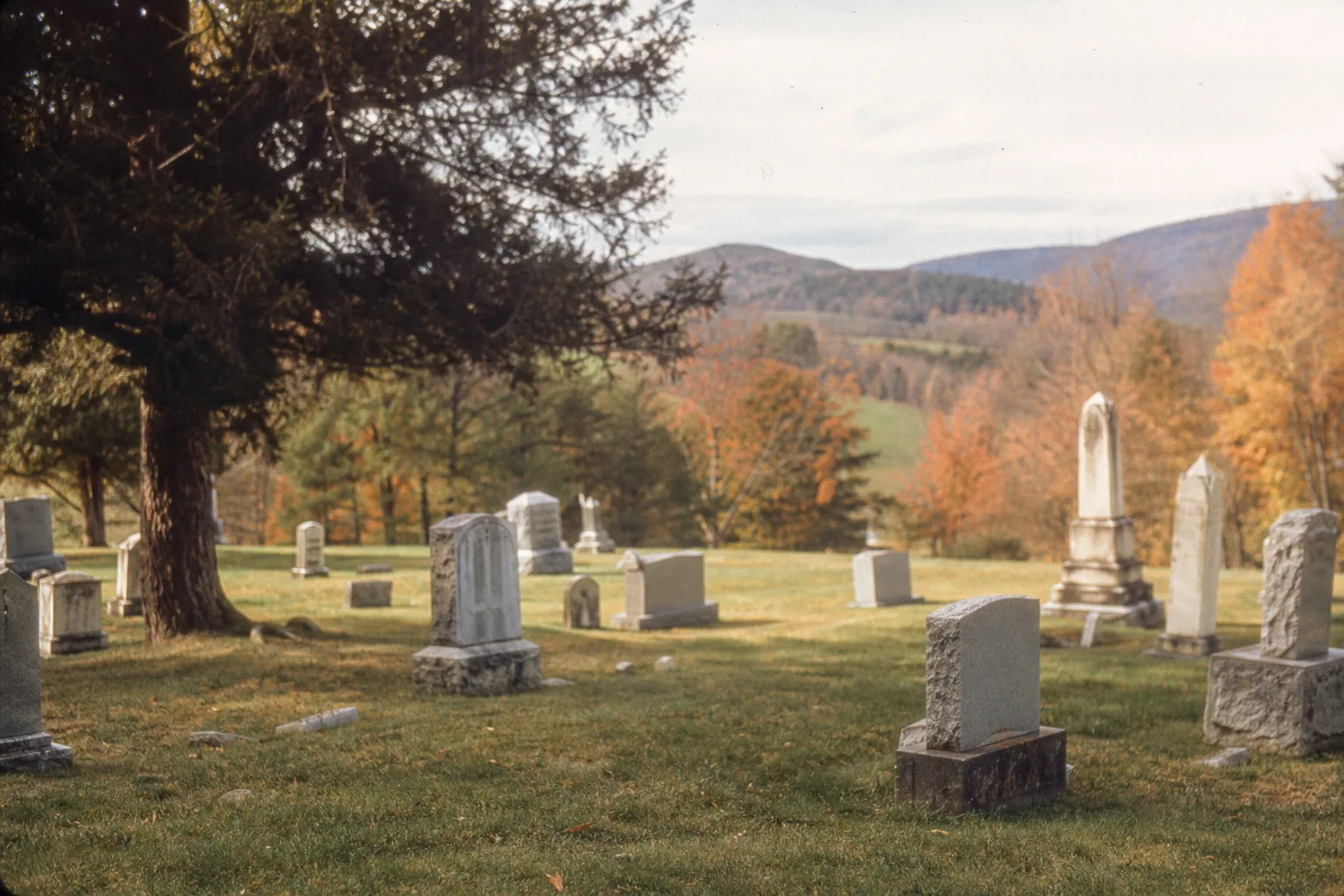
A memorial quote is five or six separate purchases printed as one number, and only some of them are open to negotiation.
A memorial quote usually arrives as a single number on a single page, which is exactly the format that makes it hard to argue with. Underneath that number sit five or six separate purchases, made from different suppliers, on different schedules, with different amounts of give in them. The granite comes from a quarry and a shop. The lettering comes from a sandblaster's time. The foundation comes from a mason or from the cemetery itself, and the last line often comes from a volunteer trustee reading off a fee schedule adopted years ago. Separating them is the whole exercise.
The die, meaning the upright tablet itself, and the base it sits on are priced by cubic volume and by color, and those two variables do most of the work in the final figure. Barre gray, quarried locally, is generally the least expensive stone a Vermont shop can put in front of you, because it travels the shortest distance and the shop buys it in quantity. Reds, blacks and the imported greens cost more per cubic foot, sometimes substantially more, and they also carry longer lead times. Adding two inches to the thickness of a die raises the raw stone cost, the polishing cost and the freight cost at once. That compounding is why thickness is the single most expensive-feeling inch on the sheet.
Carving is priced either per letter or as a flat charge per panel, and shops differ enough in method that the same inscription can be quoted two ways at the same shop. A standard name, two dates and a short line of scripture is routine work: stencil, blast, clean, done. Hand-cut lettering, deep V-cut work, a laser-etched portrait or a shaped rose in relief are all skilled hours, and they scale steeply. This is where a family can genuinely change the number without changing the stone, by cutting the epitaph, using a simpler face, or leaving the second death date to be added later as a field cut. Field cuts are billed separately and cost more per letter than shop work, so that saving is a deferral, not a discount.
Setting a stone in New England means fighting frost, so the concrete foundation is not an optional line. Most shops pour a footing that reaches below the frost line, or set on a poured pad with a sand or gravel bed, and the price rises with the footprint of the marker and the difficulty of getting a mixer or a wheelbarrow near the lot. Delivery over four miles of unpaved town road, up a hill, in a burial ground with no vehicle access past the gate, is a real cost, and shops price it as labor and equipment rather than mileage. Ask specifically whether a boom truck can reach the lot. If it cannot, two men and a tripod hoist will do it, and that shows up on the invoice.
Then comes the cemetery. A town or association burial ground typically charges a setting fee, a perpetual care contribution, or both, and those are fixed by vote of the trustees rather than by anyone's willingness to bargain. Some cemeteries require that their own contractor pour the foundation, which removes that line from the monument dealer's quote and adds it to a separate check. Others charge a flat inspection or permit fee. Shops that sell grave markers across several towns usually keep these schedules on file and will tell you the number before you order, but the obligation to confirm sits with the buyer, because the trustee, not the shop, controls access to the lot.
The three common forms sit in a predictable order, and the gap between them is mostly volume and finishing. A flat marker, granite or bronze on a granite base, set flush with the turf, uses the least stone and the least polished surface, and it is almost always the least expensive marked option. A slant, a wedge of stone standing perhaps sixteen to twenty inches with a polished front face, sits in the middle. An upright die on a separate base is the most expensive of the three, because it needs more cubic feet, more polished faces, a heavier foundation and more labor to set. Mowing rules matter here too: cemeteries that require flush markers have effectively chosen the low end of that range for you.
Assume, when comparing quotes, that two shops quoting the same stone are not quoting the same job unless the foundation, the delivery, the setting and the cemetery fees appear as named lines on both sheets. The Federal Trade Commission is responsible for how funeral goods are priced and disclosed to consumers, and the habit that rule encourages, itemized pricing given in writing before you commit, is worth insisting on from a monument dealer even where it is not strictly required.
The negotiable parts, in practice, are color, size, inscription length and carving method. The fixed parts are the frost depth, the cemetery's fee schedule and the physical distance from the road to the lot. Knowing which is which turns one intimidating number into four ordinary decisions.
In small New England burial grounds, the plot record and a trustee's written permission decide the stone's size, material and fittings long before a carver quotes the work.
How Barre grey, imported granite colors, nineteenth century marble and roofing slate each hold an inscription through frost, road salt and months under snow.
Names, dates, nicknames and an epitaph are fixed the moment the blast hose starts, so here is what to verify while changes are still free.